DNS 31, GME 45, AND ETO 18 POP REPORT
The year 2025 wrapped up for Anglo-Eastern Maritime Academy in a legendary style, with two eminent Indian personalities gracing the POP function of three batches –
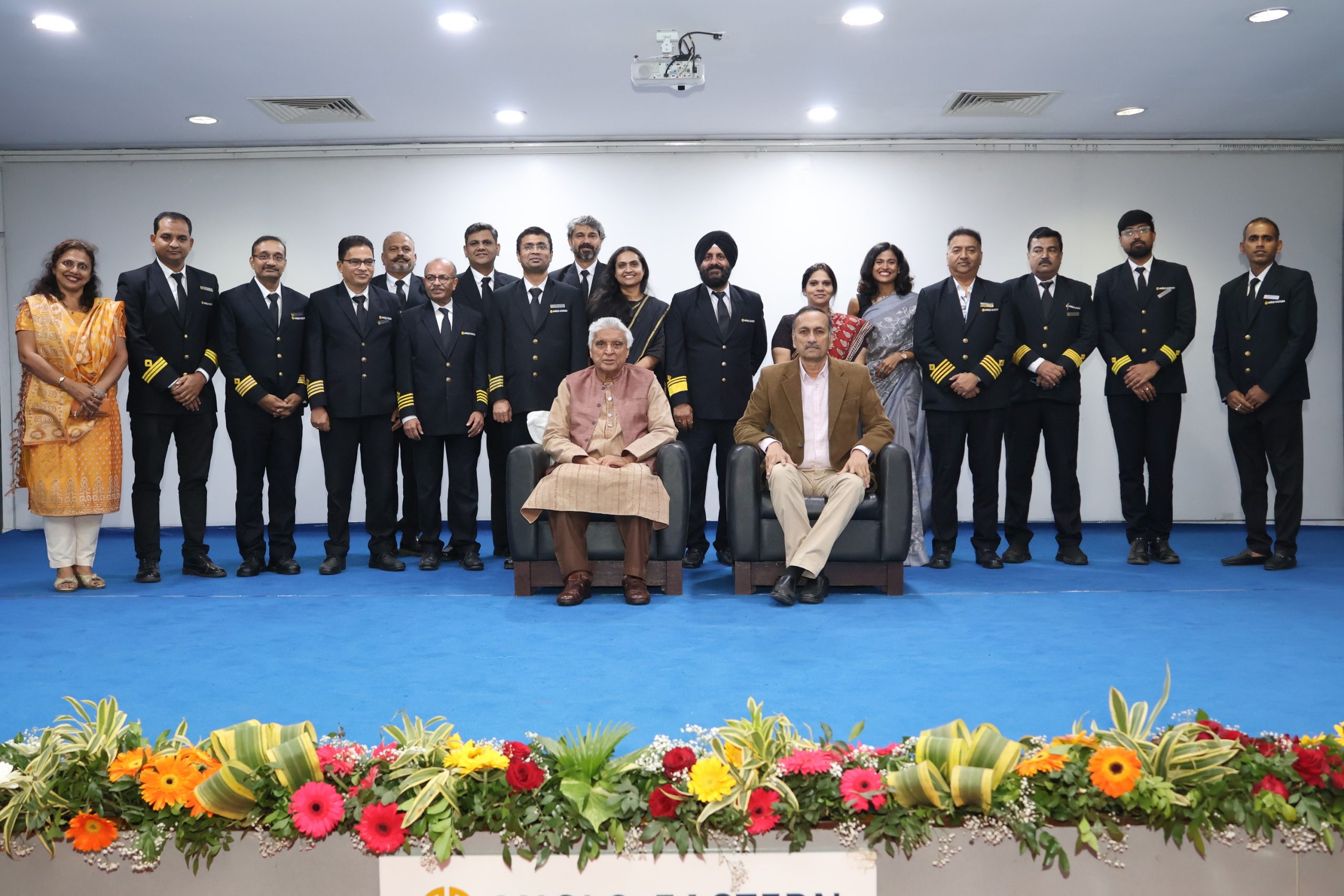
DNS 31, GME 45 and ETO 18, which took place on 26th December 2025. The Chief Guest was the Additional Director General of Shipping, DGS, Shri Sushil Mansing Khopde and the Guest of Honour was the renowned Indian lyricist, poet, and screenwriter, Shri Javed Akhtar, a recipient of the Padma Bhushan and Padma Shri awards, which are third- and fourth- highest civilian awards of the Republic of India.
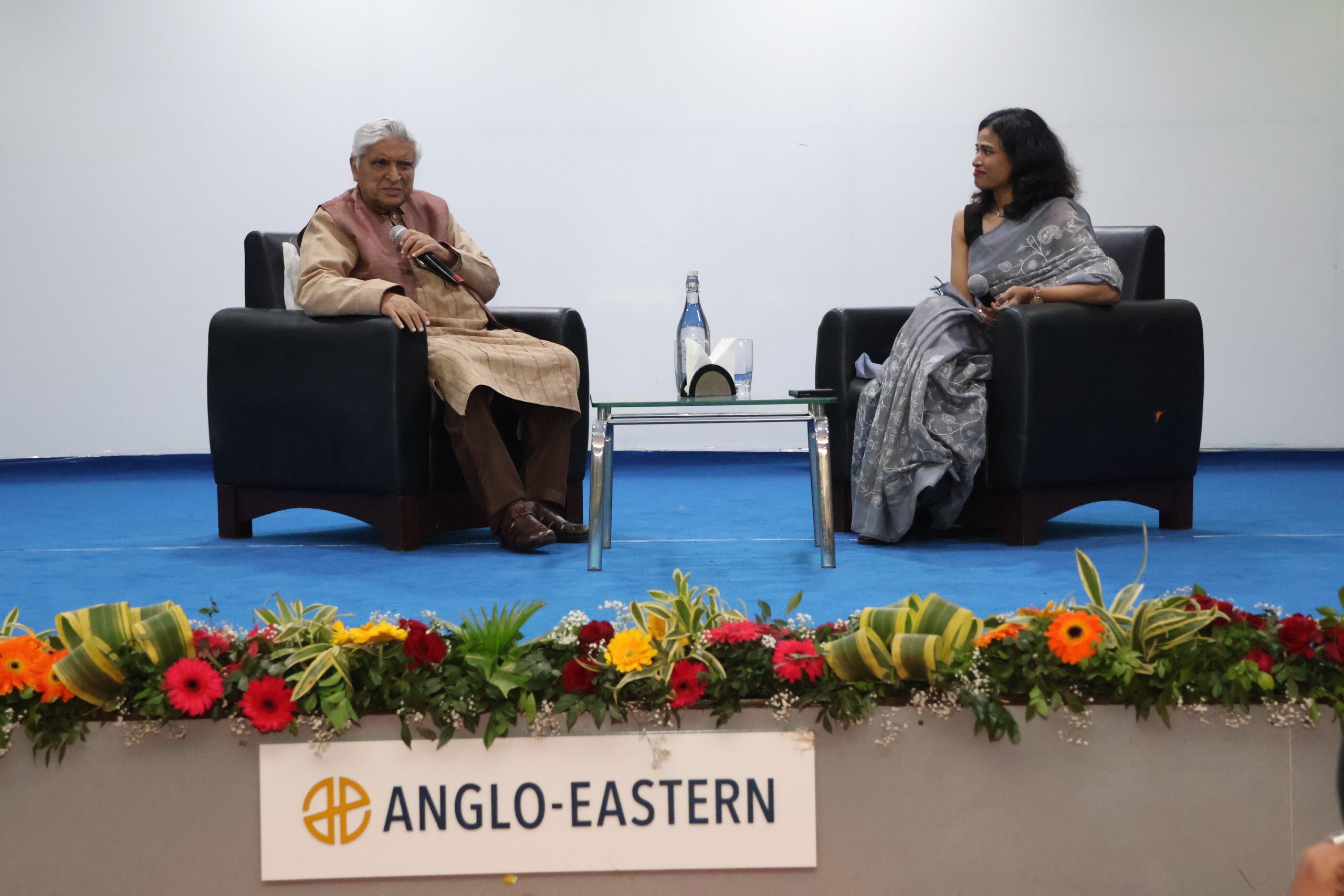
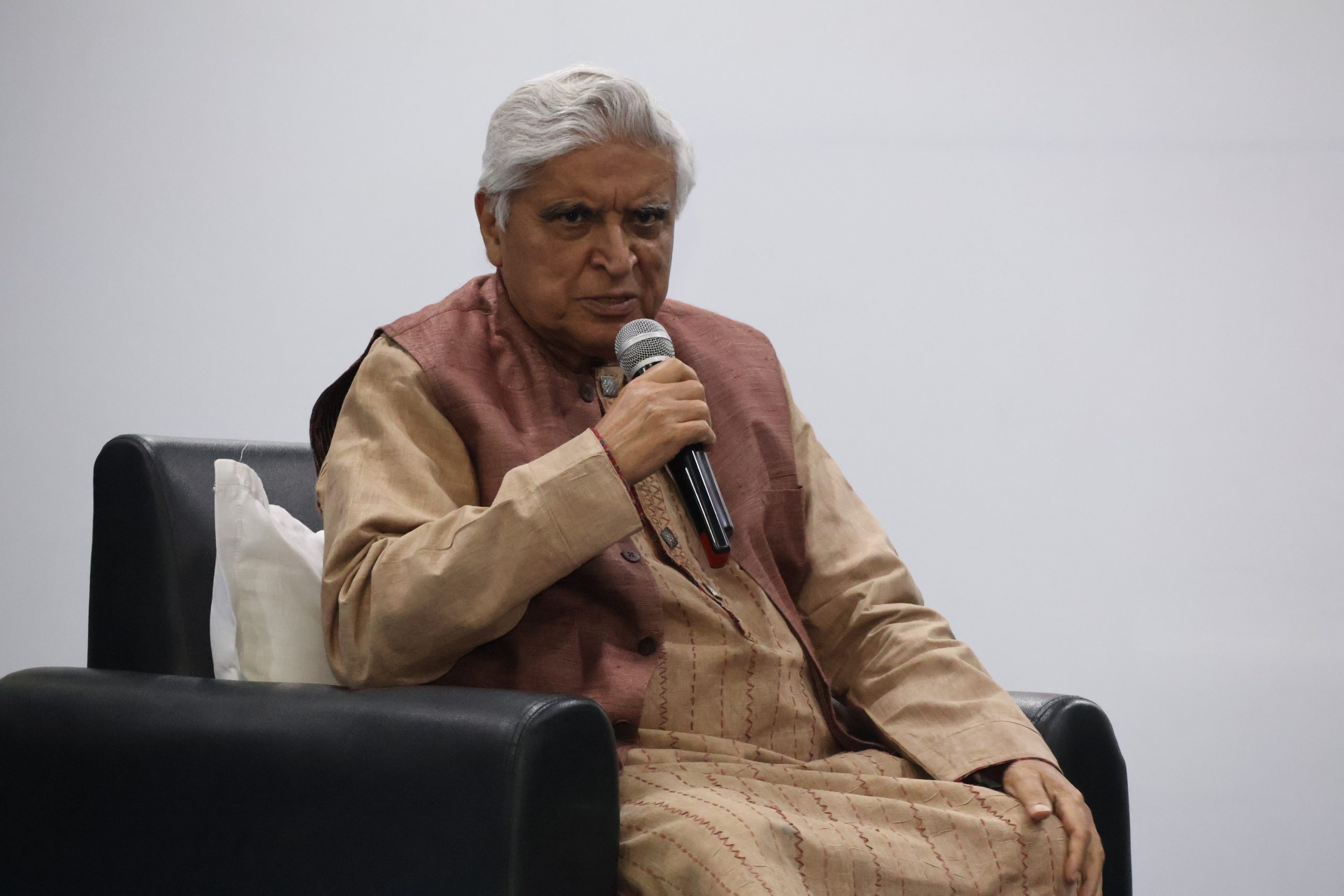
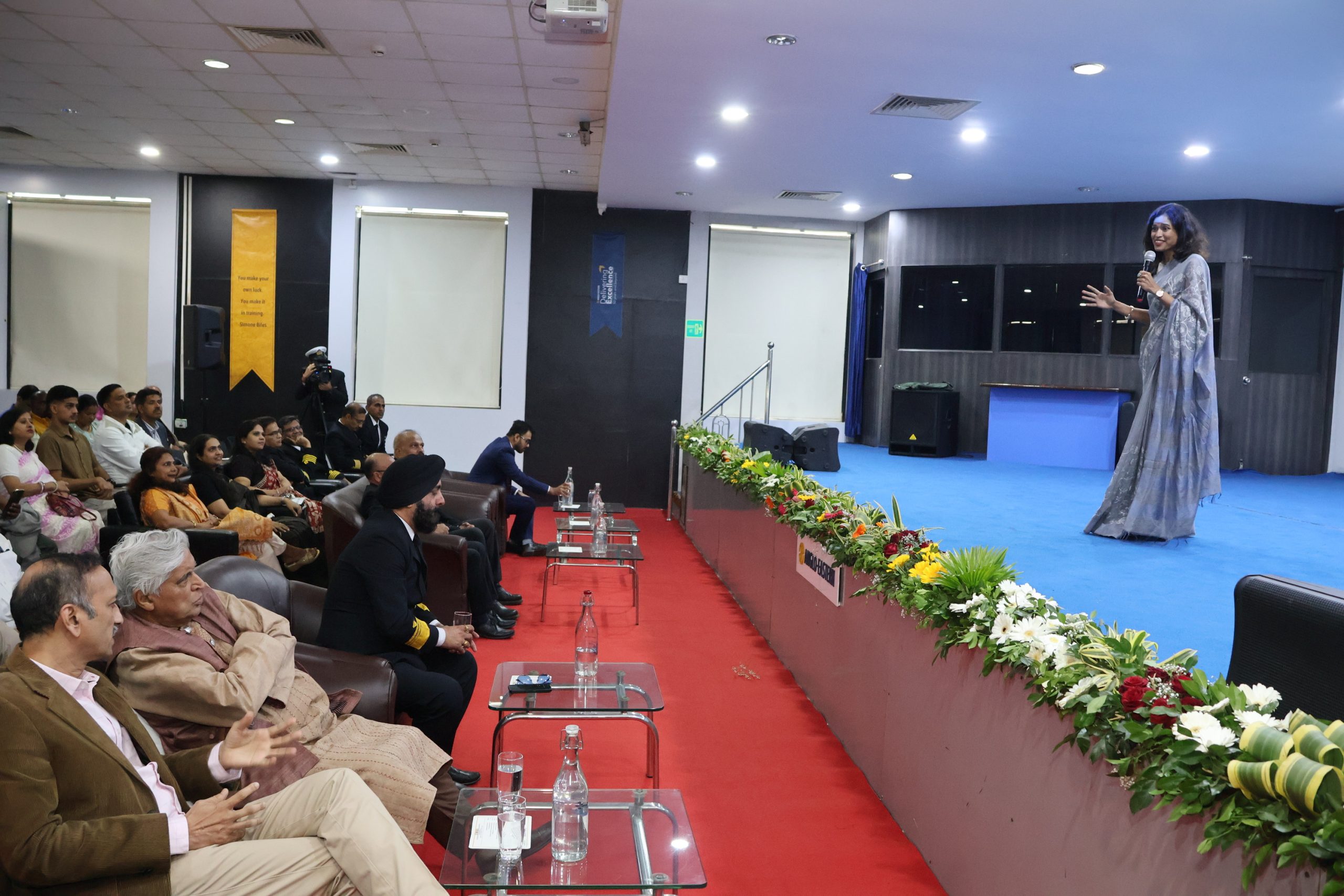
Shri Javed Akhtar is immensely popular in Indian cinema and is regarded as one of the most influential voices in contemporary literature and is very popular among Gen Z for his perspectives on life and society. Keeping this in mind, the function that took place at the AEMA auditorium witnessed something truly special that had never happened before – a new segment called the AEMA Conclave was introduced, where Shri Javed Akhtar was cordially invited on stage for a dialogue with AEMA physics faculty Ms. Sweta Singh. During this interaction, questions were posed to him on topics ranging from the maritime industry to life at large, with particular relevance to cadets. The audience had the rare opportunity to hear insights and experiences straight from the legend himself. This segment is covered in detail later in the report.
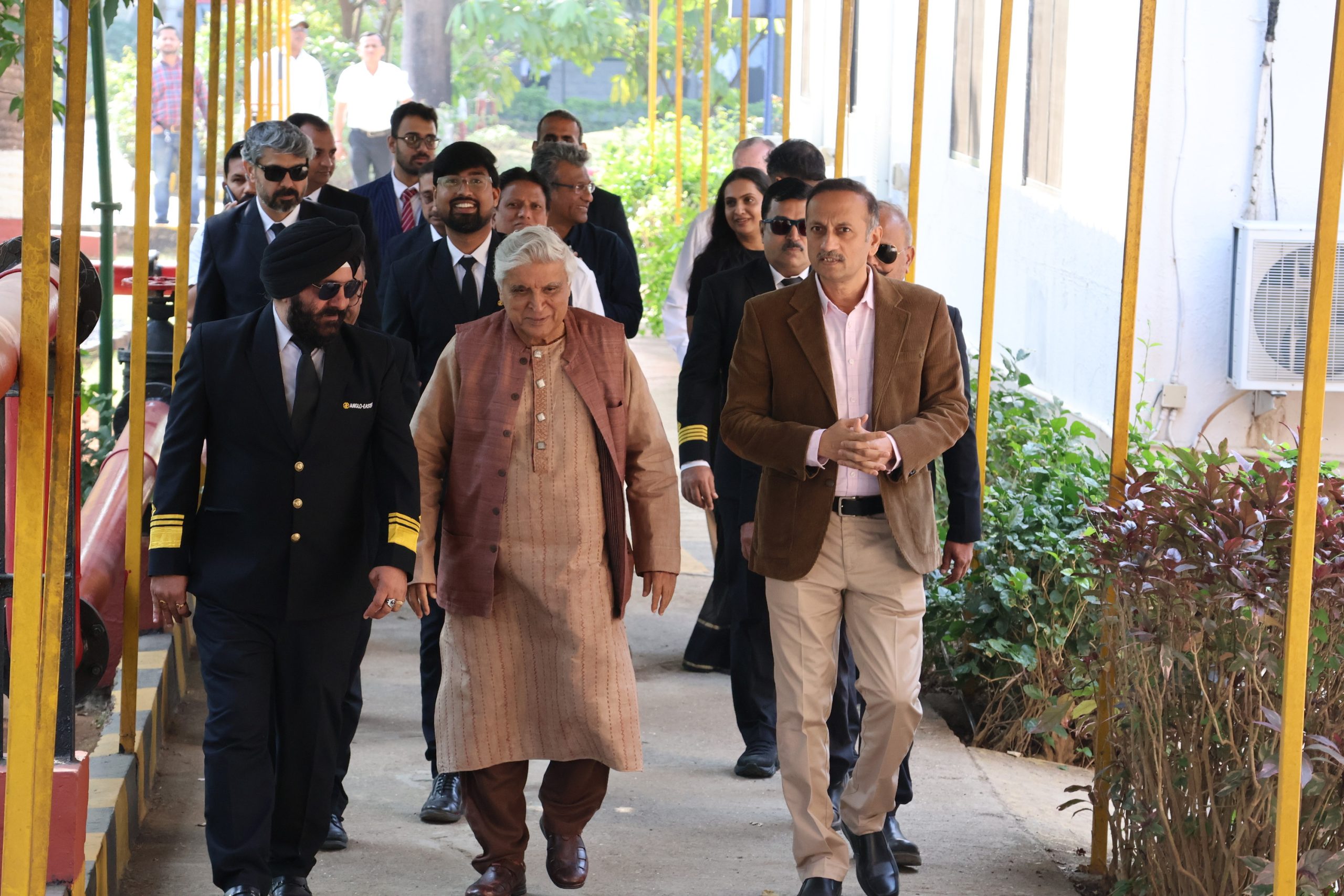
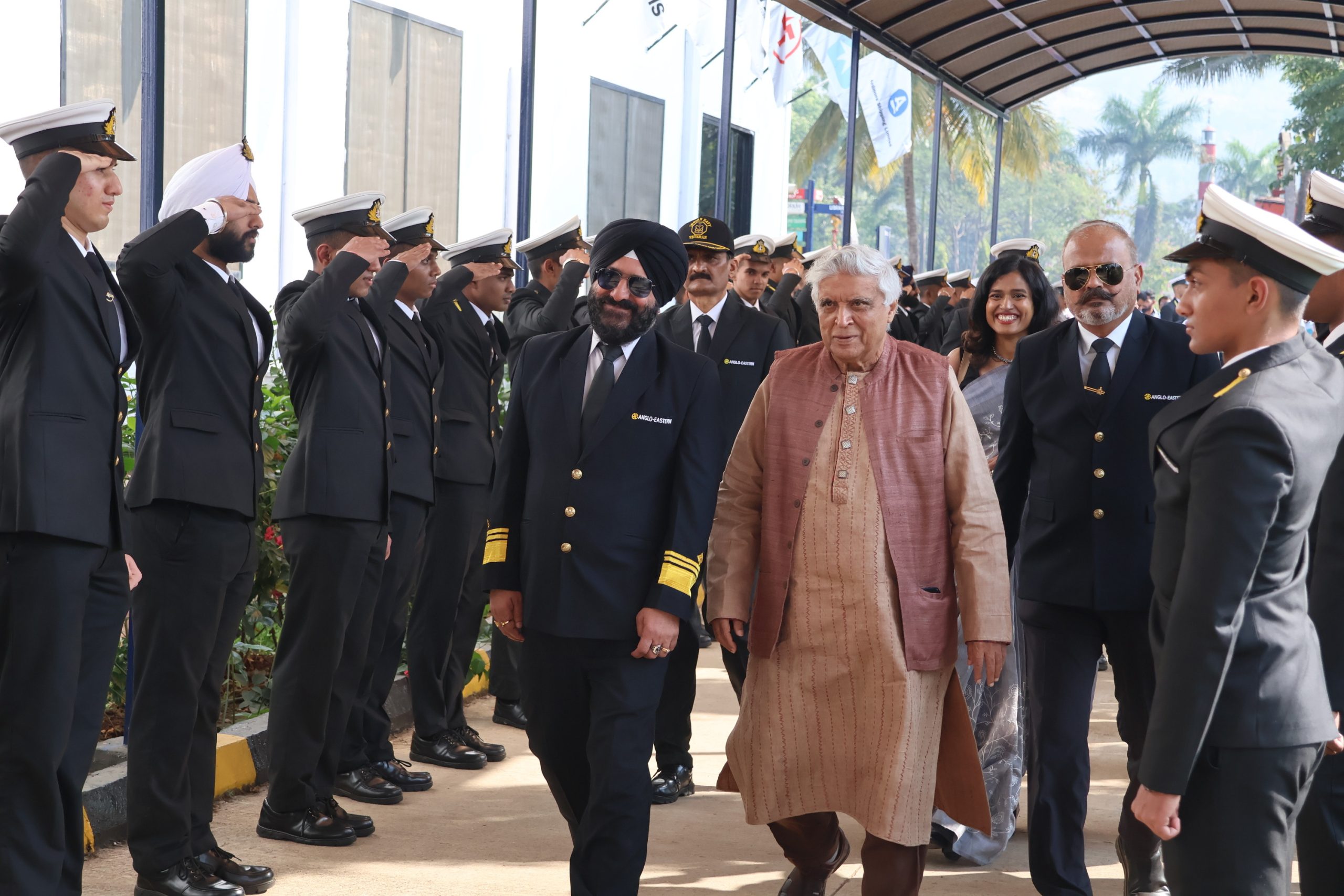
POP day commenced with the customary Guard of Honour for the dignitaries. Soon after the ceremonial flag break at the flagpole area outside the academic block, the dignitaries were given a brief tour of the academic block, during which they visited the Navigation simulator, Wheelhouse and Language Lab.
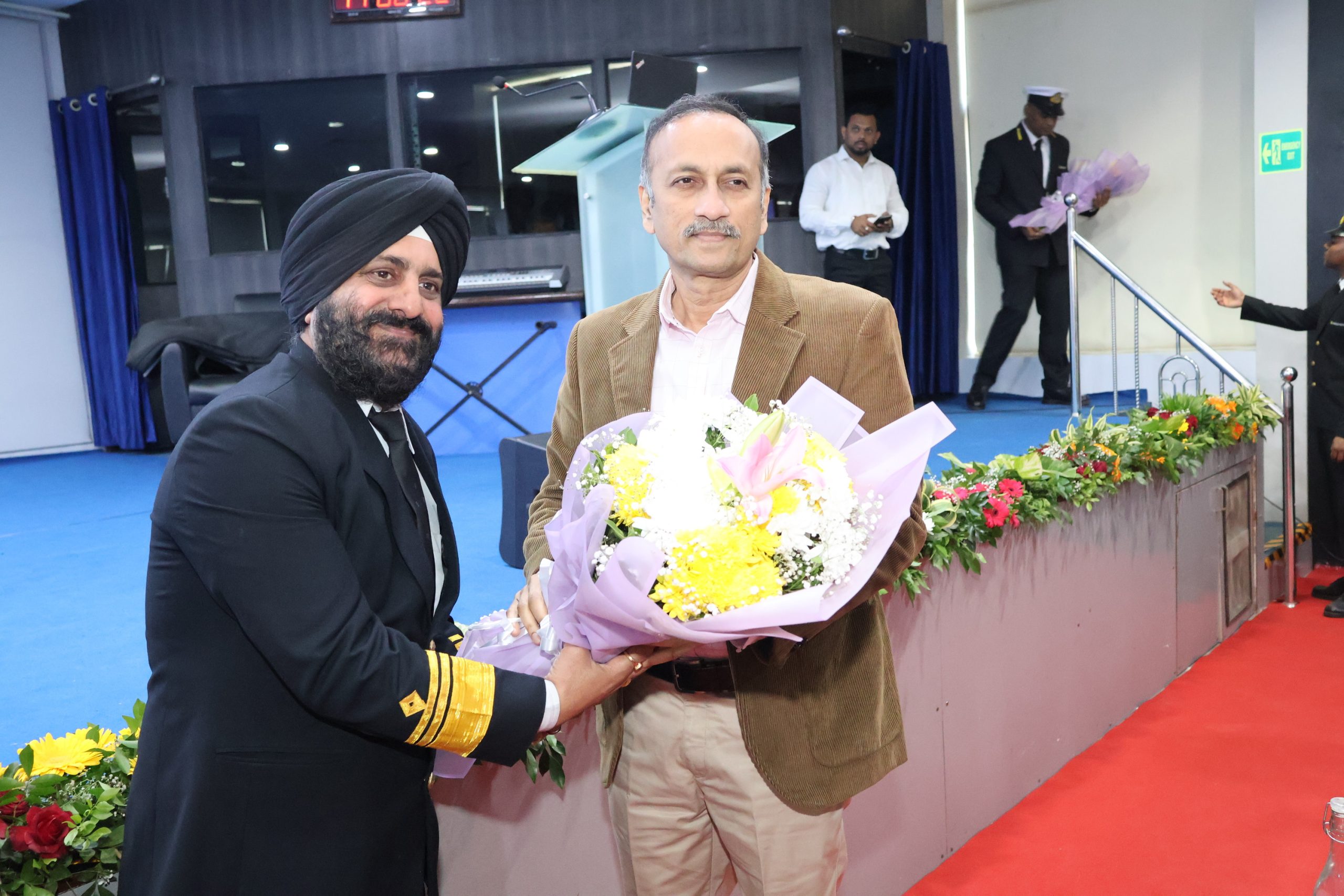
They were then welcomed to the auditorium where the main event took place. The programme was opened by physics faculty Ms. Sweta Singh, who after the safety briefing invited AEMA Principal Mr. Tejinder Bhamra onto the stage.
While congratulating the batches on the successful completion of their courses, Mr. Bhamra extended a special welcome to the Chief Guest Shri Sushil Mansing Khopde and spoke about his important role in improving the welfare of Indian seafarers. The Principal highlighted the introduction of Merchant Shipping Act 2025, calling it a major reform that twill bring positive change to India’s maritime sector.
The Principal spoke about AEMA’s commitment to not only providing technical skills but also developing responsible global citizens. He proudly mentioned that the Anglo-Eastern Group was ranked the top ship management company in 2025 and reaffirmed AEMA’s goal of preparing quality cadets for the maritime industry.
In his concluding message, he addressed the cadets directly, reminding them that life at sea will test them both professionally and personally, so he encouraged them to stay disciplined, humble, and guided by strong values as they move forward in their careers.
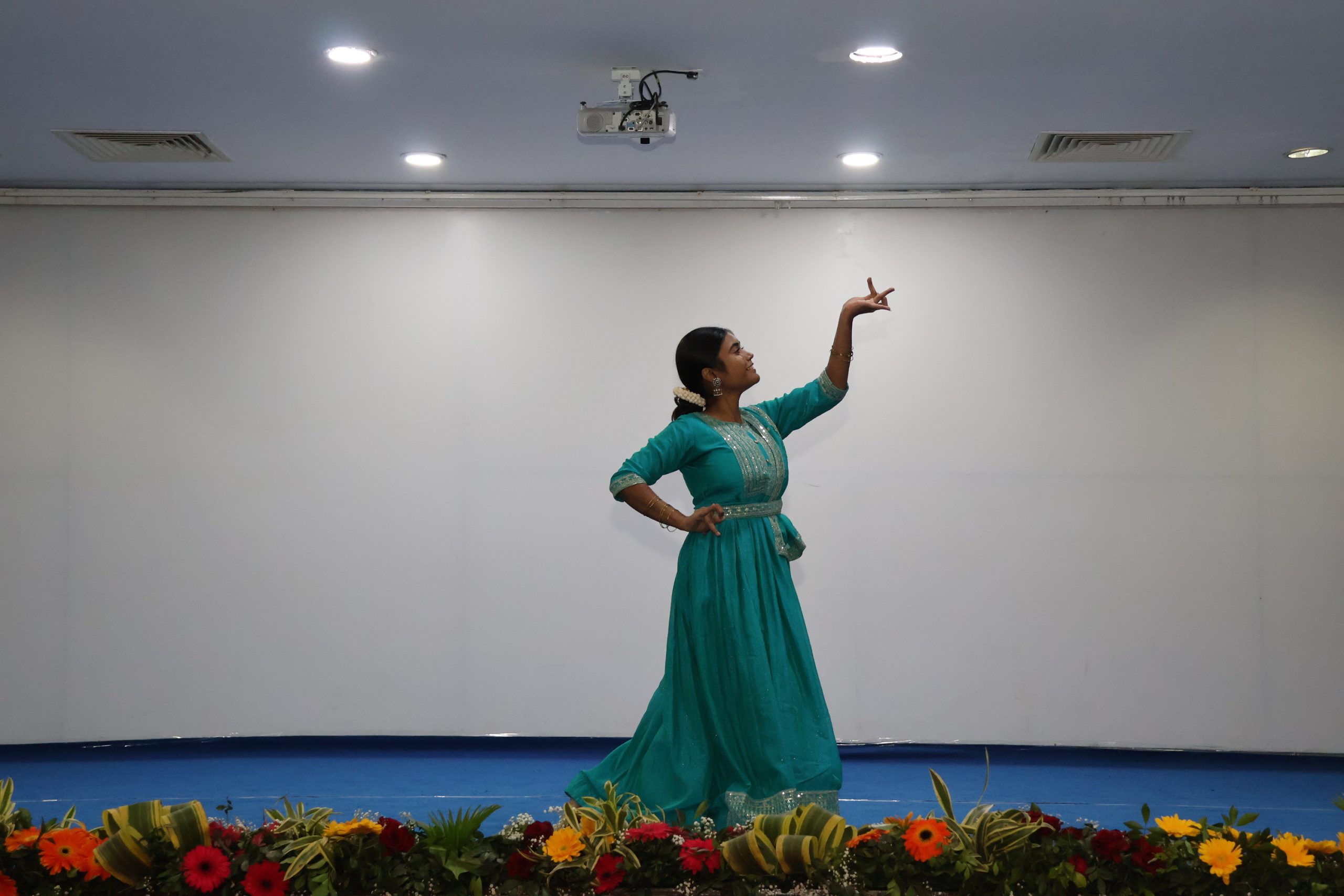
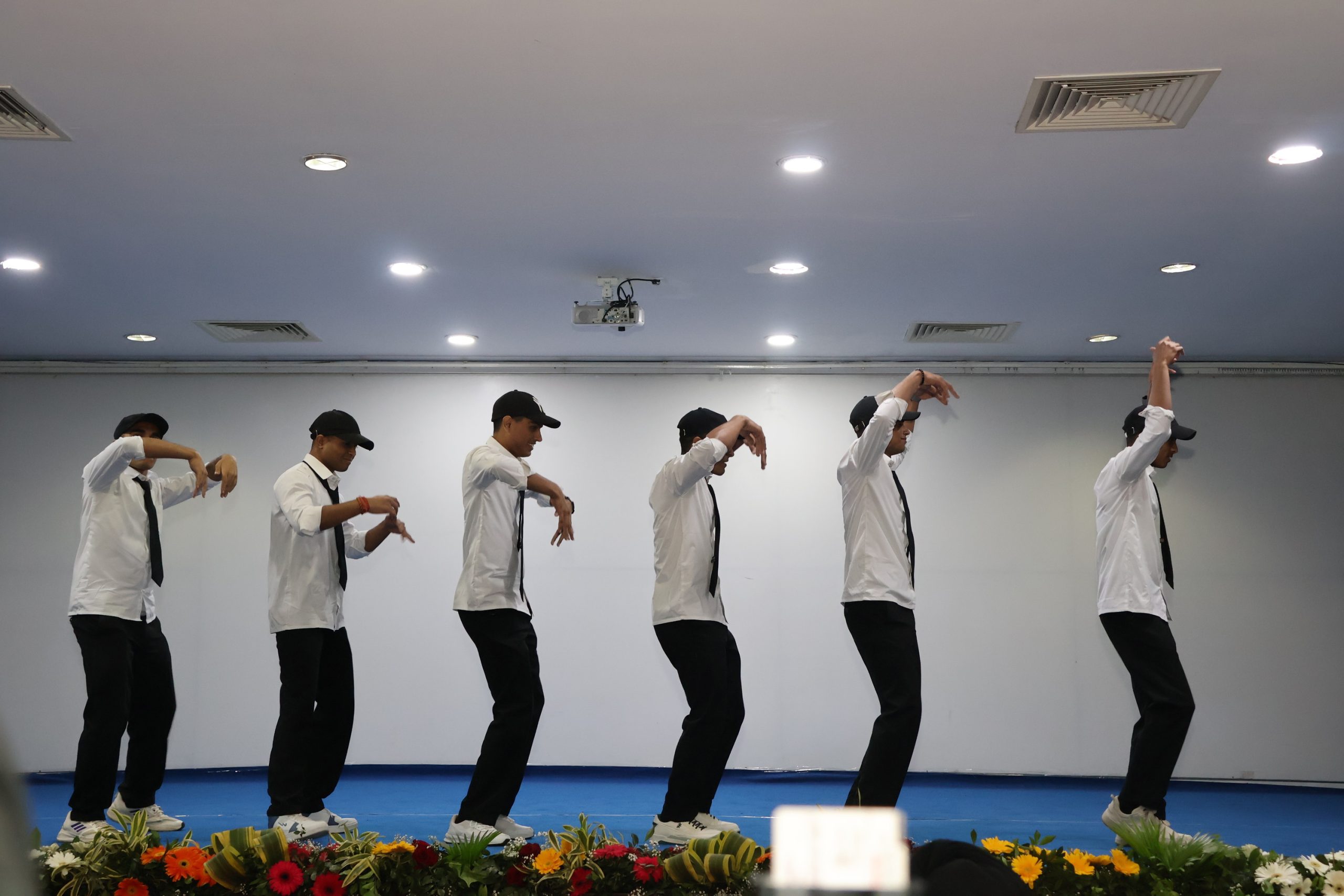
The event then unfolded into the cultural performances of cadets and the report presented by the Head of Departments of the three streams.
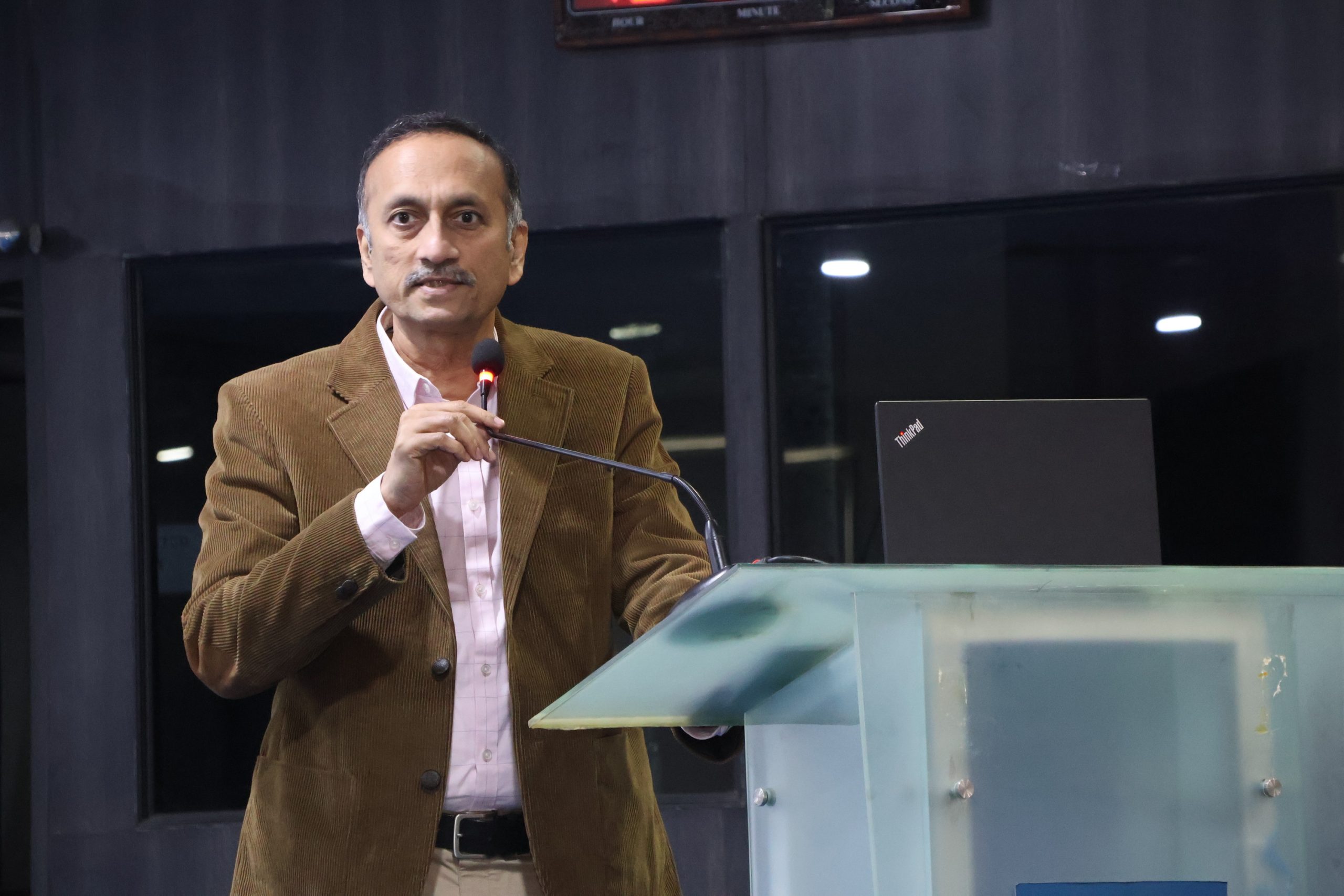
In the address of Chief Guest, Shri Khopde spoke about the Government of India’s vision to increase India’s share of global seafarer from the current 12 percent to 20 percent by the year 2030, as outlined in the Maritime India Vision (MIV) 2030 Plan. He explained that Indian seafarers are already highly respected worldwide for their high standards, which is why employers prefer them. However, he stressed that maintaining and further improving this quality is very important, and for this reason, the Maritime Training Institutes (MTIs) play a crucial role.
He went on to highlight various initiatives of DG Shipping and also explained the close monitoring of seafarers through mandatory exams, promotions, and the Crisis Management module. Concluding his address, he encouraged cadets to dream big while staying grounded in the values, using the metaphor of a kite to illustrate that values act as a stabilizing string while ambitions soar!
Also present at the event was AEMA alumnus from DNS 02 batch, Capt. Alome Nazareth, who shared his feelings of returning to his alma mater with fond memories of being a nervous cadet 14 years ago, sharing with the new graduates that their passing out ceremony marks the start of an exciting journey as future Maters, Chief Engineers, and Electrotechnical Officers. Speaking openly about the challenges of stress, pressure, and loneliness, he encouraged cadets to cherish friendships formed during the training and seek guidance from seniors when needed. He concluded by congratulating them, urging them to pursue excellence at sea as a mark of both personal and national pride, and expressed his hope of sailing alongside some of them in the future.
The event now unfurled to a brand-new segment called “AEMA Conclave” where Shri Javed Akhtar was cordially for an interactive session between the faculty members and cadets, moderated by Ms. Sweta.
The session unfolded across five broad themes that explored his life journey, creative process, views on education and creativity, perspectives related to the maritime profession, and guidance to cadets on life choices and rational thinking. Throughout the interaction Shri Akhtar responded with clarity, wit, and depth, making the discussion both reflective and accessible to the young audience present.
When invited to describe his life using maritime terminologies such as Captain, Chief Engineer, or Electrotechnical Officer, Shri Akhtar likened life to navigating an ever-changing ocean. He explained that just as a ship is constantly influenced by waves, winds and external conditions, human life is shaped by society, circumstances, and personal egos. According to him, no single role or quality is sufficient to navigate life successfully. Instead, survival and progress require adaptability, balance, and the ability to perform multiple roles simultaneously, much like managing a vessel in unpredictable waters.
The conversation then turned towards education, where an audience member questioned the lack of integration of scientific education and liberal arts, Shri Akhtar agreed with the concerns about the growing disconnect between the two disciplines. He observed that students of the arts often remain unfamiliar with scientific thinking, while those trained in science may lack exposure to cultural, philosophical, and linguistic traditions. He cautioned that this divide often creates space for misinformation, myths, and pseudo-knowledge to flourish and stressed the importance of a more integrated and holistic approach to learning.
Responding to a question from Ms. Salini Krishnan, English Faculty, about his writing process and how he determines when a piece of writing is complete, Shri Akhtar explained that his approach differs significantly between commercial writing and literary writing. Commercial writing, he said, is driven by deadlines, where discipline and external pressure act as catalysts for creativity. Literary writing, on the other hand, is free from such constraints and is driven purely by inspiration and originality.
Shri Akhtar also spoke at length about the maritime industry and pointed out that seafarers have historically played a crucial role in the exchange of languages, literature, and ideas across civilizations, yet this cultural contribution is rarely acknowledged. He emphasized the need to bring greater awareness to this aspect of maritime life.
Given the young audience, a question on love and belonging naturally arose, to which he responded with characteristic insight saying that love is an essential form of “human irrationality.” He noted that although humans strive for rationality, complete rationality is neither possible nor desirable. He illustrated his idea through the example of maternal love across species, where the instinct for self-preservation is overridden for the survival of one’s offspring!
Addressing the challenge of loneliness and isolation faced by seafarers, Shri Akhtar offered thoughtful advice on building a positive inner world. He spoke about the existence of two worlds – the external world and the one within us and emphasized the importance of introspection. Using a metaphor, he explained that knowledge, like food, has value only when it is properly digested. Reading, reflecting, and thinking deeply, help transform experiences into wisdom. He urged the youngsters that whenever they have free time onboard, utilize that time to introspect, learn, and grow. One of his most applauded remarks was that “Experience is not merely incident, but the conclusion one draws from that incident”
When asked about how one can remain grounded, he remarked that arrogance often stems from insecurity and deep-seated inferiority complexes. He emphasized the importance of having a healthy and honest self-view. Defining success, he offered a simple yet powerful perspective, stating that success lies in the ability to make choices freely. If one is bound by constraints that prevent choice, then that state cannot truly be called success.
The session concluded on a memorable note with Shri Javed Akhtar reciting an original poem, leaving the audience inspired and reflective. The auditorium echoed with thunderous applause, bringing to a close a session that beautifully blended wisdom, creativity, and practical life lessons, and left a lasting impression on everyone present.
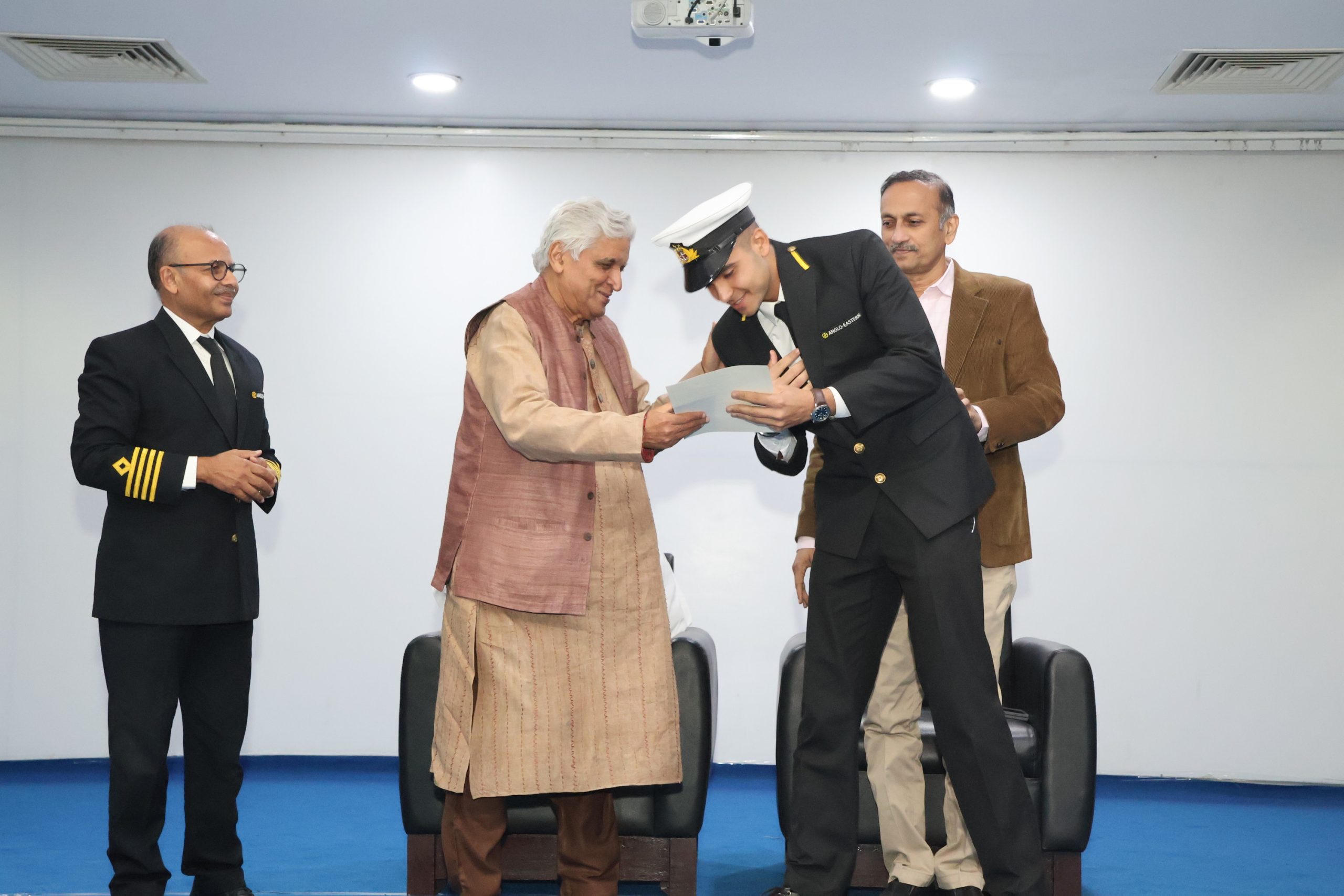
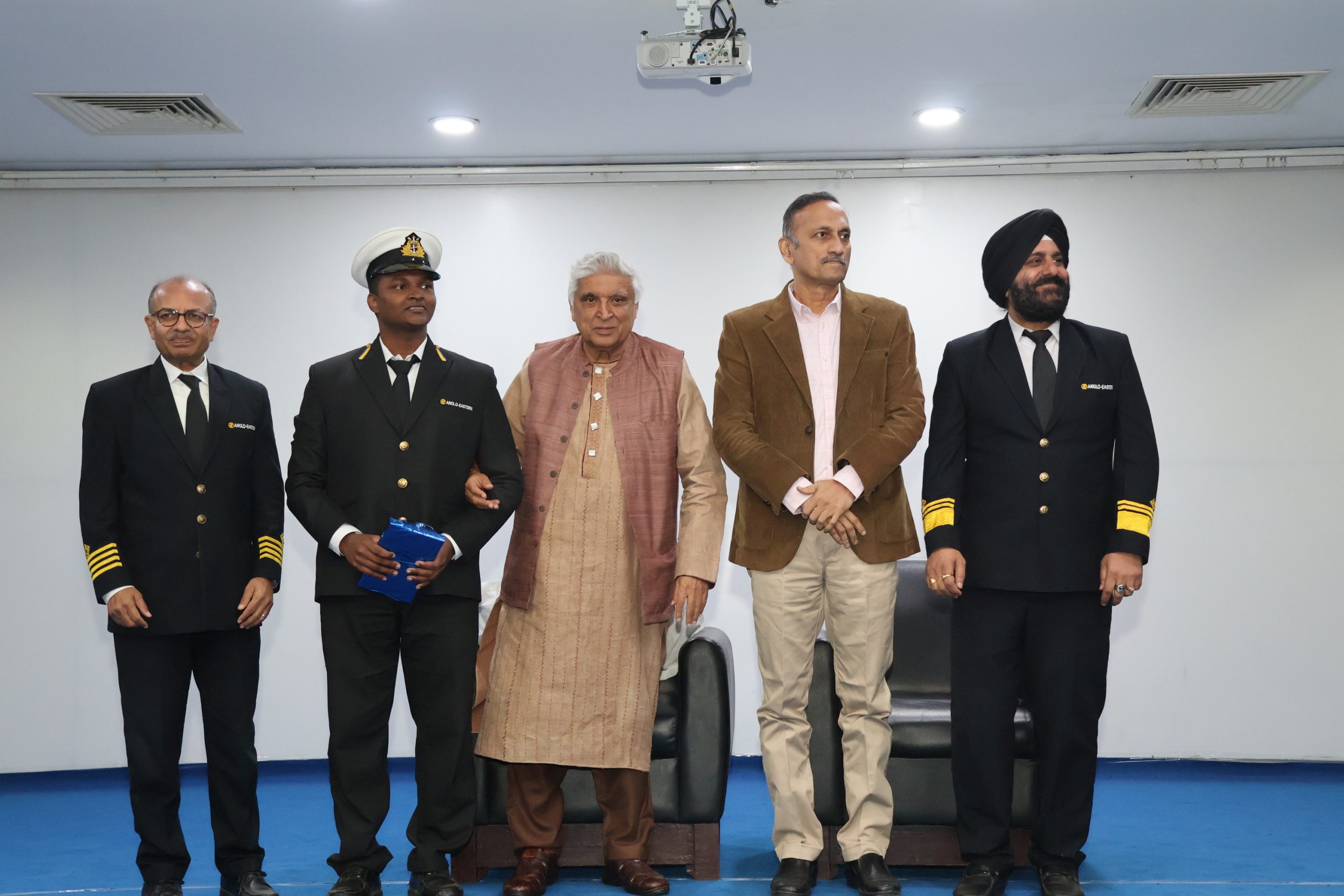
In the prize distribution segment, the Overall Best Cadet prize was awarded to Cadet Sameer Parkash (DNS 31), Mustak Shaikh (GME 45), and Pawan Ghimirey (ETO 18) and the event concluded with a Vote of Thanks and a proud rendition of the National Anthem.